The Dominican Population in Massachusetts
[cool-timeline layout=”horizontal” show-posts=”7″ date-format=”Y”]By Miguel Hernández Mercado
Boston has a bridge named after David Ortiz. Near Fenway Park—an emblem of Boston—is the bridge renamed in 2016 as Big Papi Bridge. A Dominican’s name has been immortalized in another land.
The influence Dominicans have had in the state of Massachusetts, however, goes well beyond the Red Sox—the team that has retired the numbers of both David Ortiz and Pedro Martinez.
According to the 2015 census, Massachusetts is the American state with the 4th largest concentration of Dominican-Americans behind New York, New Jersey, and Florida. The 2010 census placed Lawrence as the community with the second largest Dominican population, with Boston coming in 4th. Lawrence placed as the U.S. community with the highest percentage of its people claiming Dominican ancestry (39.7%).
According to a 2017 report by the Boston Development Authority, the Dominican Republic is the largest source of foreign-born people in the city. Dominicans take up 12.9 percent of the city’s residents that were born outside of the United States.
They estimated a total of 132,864 Dominicans living in Massachusetts— 7 percent of all Dominican in the countries. According to their data, Dominican migration to the United States first became noticeable around the 1960s, in the aftermath of Rafael Leonidas Trujillo’s thirty-year dictatorship. By the 1980s, with the island under economic distress, the Dominican population in the United States started “rapidly increasing.” By 1985 an annual Dominican festival started, which is now held in City Hall Plaza every summer. The Dominican population in Boston is by now more stable: its percentage of native-born is now 45.9.
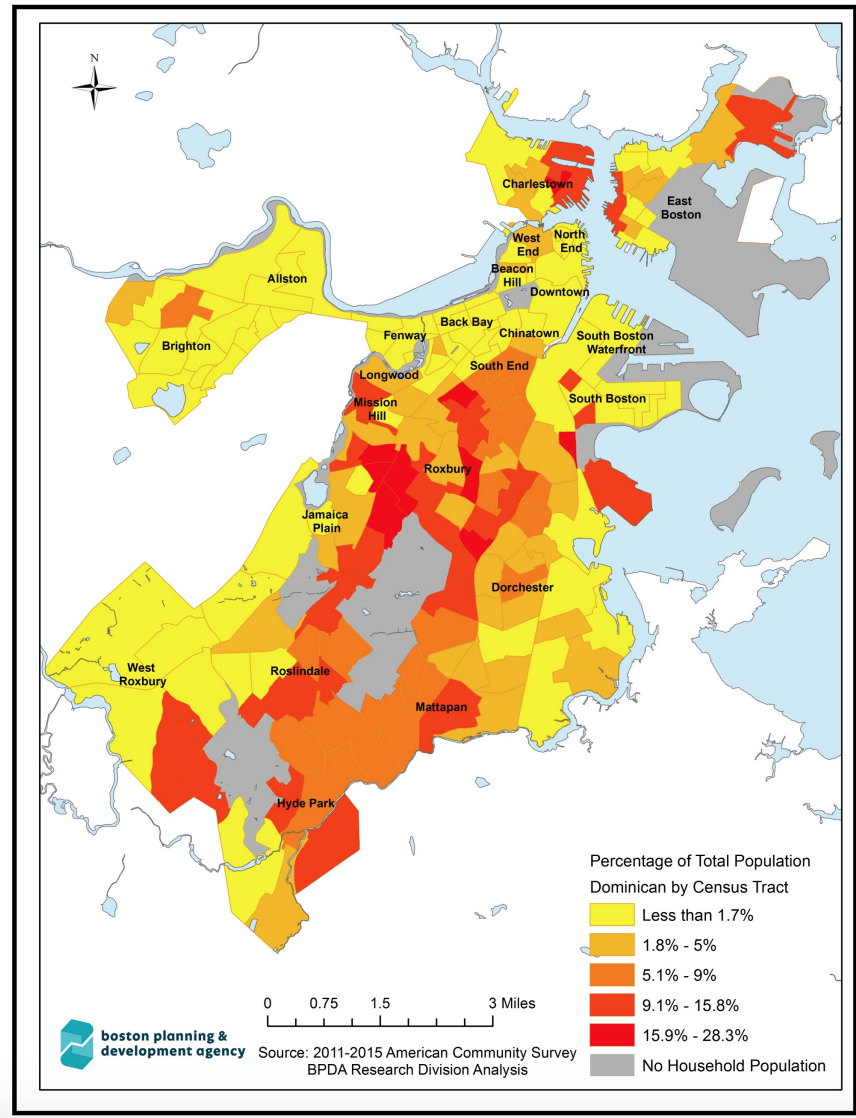
The report notes low educational attainment by Dominican adults: 35 percent lack a high school education and 12 percent have a Bachelor’s degree. 42 percent of Dominicans that are employed work in the service industry. 40.9 percent of them live below the poverty line with a median household income of $21,100.
However, perhaps a testament to the sheer number of them, their influence in the state is undeniable. For one, they hold some political representation. Rep. Andy Vargas, for example, is a 25-year-old son of Dominican immigrants that grew up in Haverhill and was elected to the House of Representatives.
Rep. Juana Matías, another native of Haverhill, made headlines during this year by overperforming in the Democratic primary for the Third Congressional District in Merrimack Valley. She didn’t win the nomination but did get 15 percent of the vote in a crowded race. She got 70 percent of Lawrence’s vote.
Their impact in the lifestyle of the state is also evident through various Dominican businesses. Merengue Restaurant, for example, has been a mainstay of Roxbury for over 20 years now and has counted politicians and celebrities in its clientele. Alex’s Chimis, a restaurant in Jamaica Plain, was recognized as business of the year last year by Boston Mayor Martin J. Walsh.
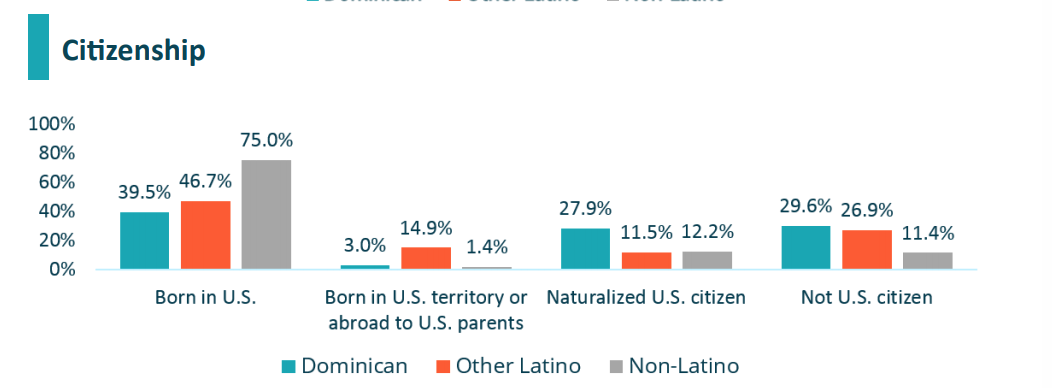
58 percent of Dominicans are foreign-born, out of which 48 percent are naturalized U.S. citizens. As the United States cracks down on immigration, Dominican immigration to the United States might slow down. In this project I tried to take a look at Dominican immigration in Massachusetts as of today. I explored political involvement through Rep. Andy Vargas and the keeping of Dominican tradition through Merengue Restaurant.