Merengue Restaurant, food and tradition
By Miguel Hernández Mercado
“¿Y ustedes están bien?”
The waitress greets you in Spanish when you walk into Merengue Restaurant in Roxbury. Lisaura’s greeting shouldn’t come as a surprise, however. Every single detail in the restaurant—from the food to the décor—has been chosen to celebrate Dominican traditions.
From the moment you walk in—before you are able to sit down and order one of Merengue’s wholesome, ample dishes most likely accompanied by the obligatory white rice and Dominican-style beans—you hear merengue music playing from their speakers.
They keep the volume reasonable. Conversations are more likely to be loud at Merengue than the music unless they happen to have live music that night. But the unique Dominican rhythm is still there. The music that Hector Piña decided to name his first restaurant after over 20 years ago still sets its pace.
Merengue, the musical genre, came from a fusion of African, Spanish, and indigenous music in the Dominican Republic. It is no coincidence that this restaurant, which serves a population that descends from immigrants and endeavors to preserve Dominican tradition in a different country, is named after a type of music that came from a clash of cultures.
To be sure, merengue—much like the chicharron (cuts of pork with skin attached fried to a crisp in its own fat) you might be able to smell in the air—is a traditional Dominican thing by now. Juan Luis Guerra, probably the man most responsible for spreading Dominican music around the world, once told a funny story about it.
When he was at Berklee he was trying to show-off at a jam session by shredding guitar solos but failed to impress anyone. He then took a güira—the percussion instrument used in merengue that kind of resembles a cheese grater—that was hanging on a wall as decoration and started playing the merengue rhythms he grew up with. Now he got everyone’s attention. Guerra said he was asked to write the rhythms down, at which laughed. These rhythms weren’t really written down. Merengue is just a thing Dominicans know how to play.
He said he knew at that point that if he was going to have an impact with his music career he was going to do it through the traditional Caribbean rhythms he grew up with.
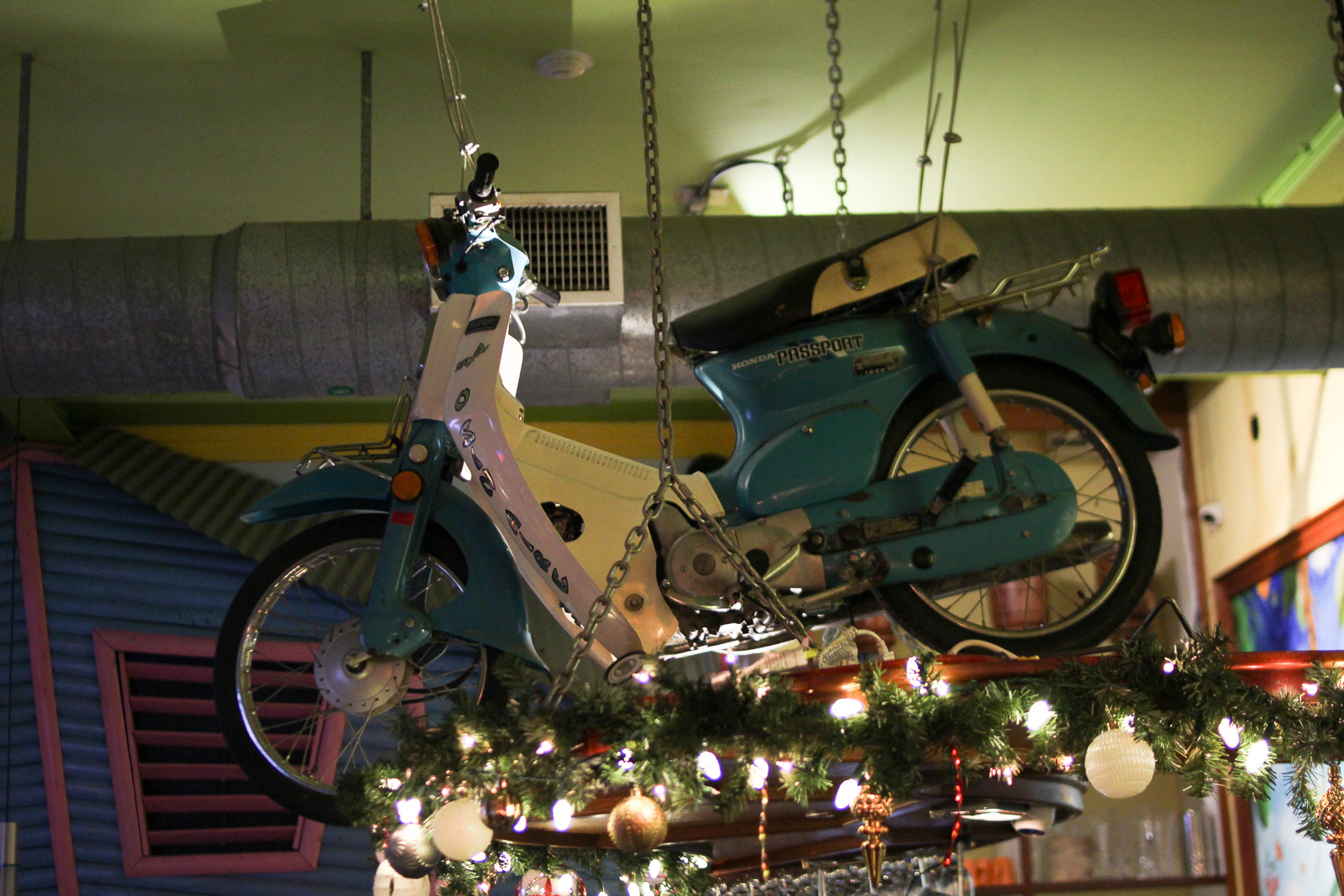
There are more symbols of Caribbean tradition scattered throughout the restaurant. The easiest to notice but perhaps hardest to recognize as a Dominican symbol is the motorcycle hanging from thick metallic chains above the register.
Cheap motorcycles have long been a form of livelihood in many areas of the Dominican Republic. Anyone can buy a small motorcycle, pick a route, and charge people to hop on as you drive back and forth it. This service is called motoconcho and has been a major from of transportation in the Dominican Republic since the 1980s. Now there’s uberMOTO as well, which is better regulated but a completely different service altogether.
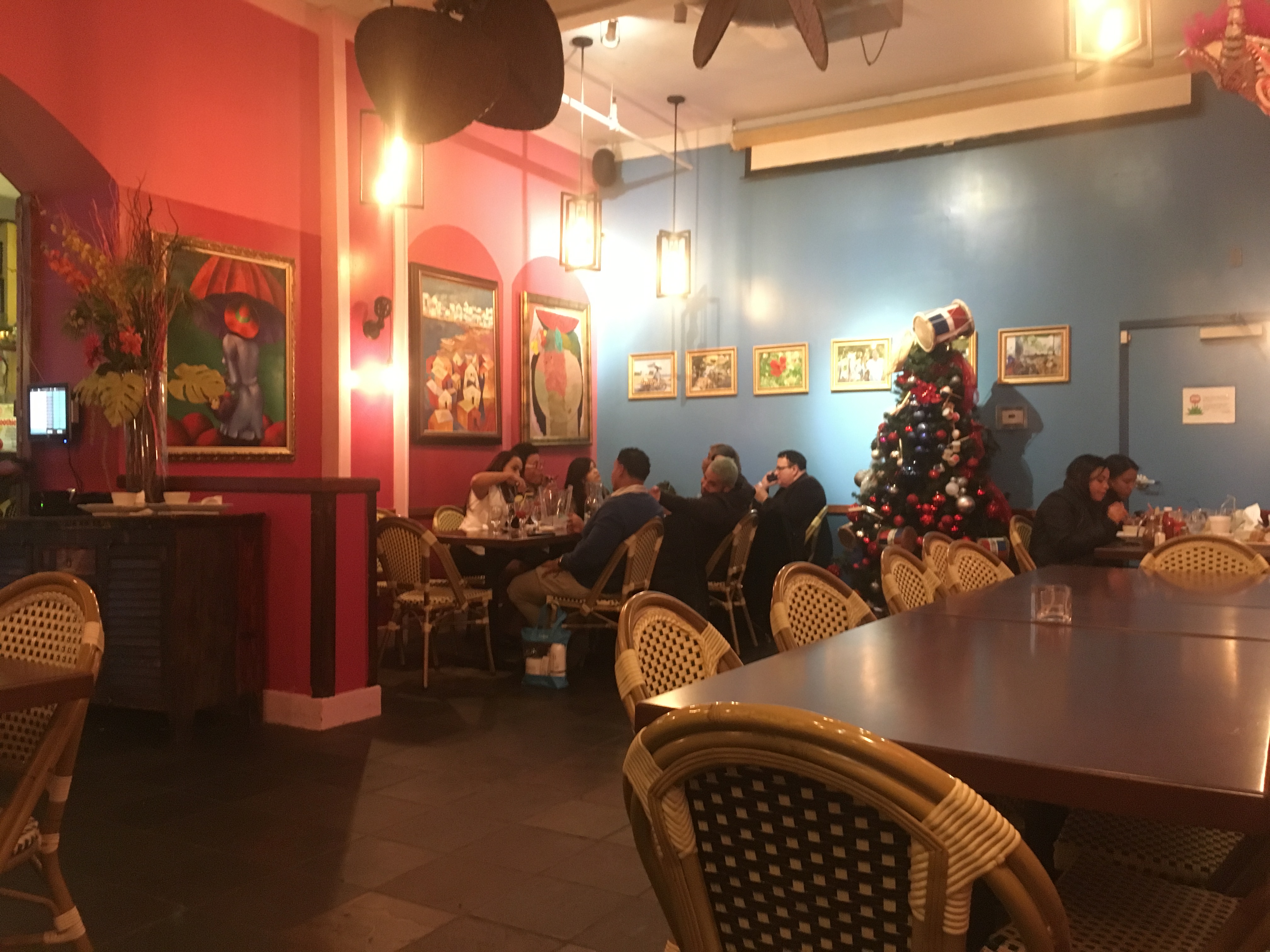
The windows are lined with drawings of palm trees to be seen from outside. The walls are filled with paintings by Dominican artists. Except for the one opposite the entrance, that one’s filled with pictures taken in the Dominican Republic. There’s one of the emblematic flor de cayena, one has a smiling fishmonger showing off his product, and another shows a coconut salesman.
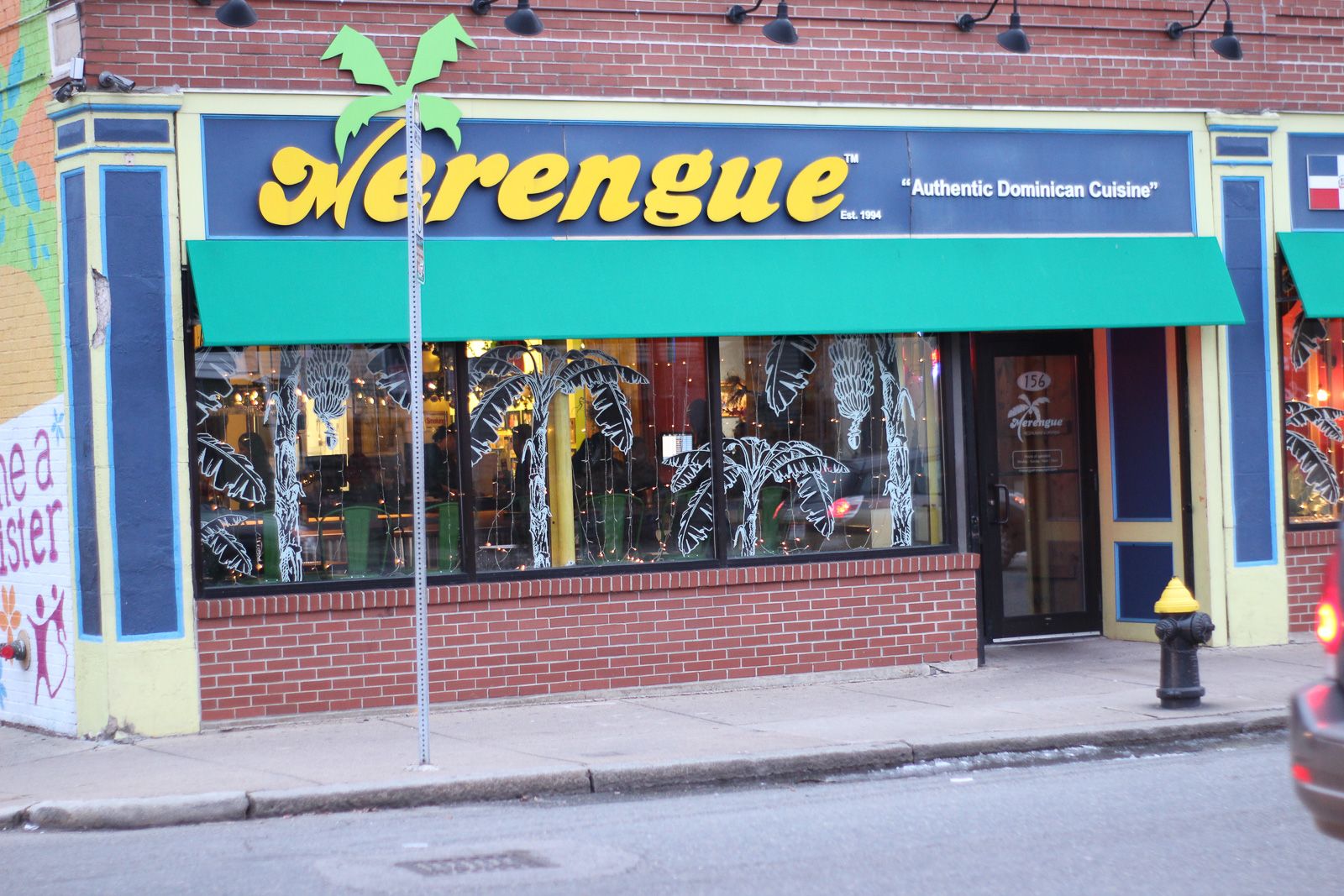
Elliot Guerrero, a Merengue customer since before 2001, also helped Piña redesign the restaurant as his first project coming out of architectural school when they moved next door. “He wanted to express the Dominican culture through the design—the upbeat part of the culture. I helped him with that,” he said. “It really stands out in Roxbury.”
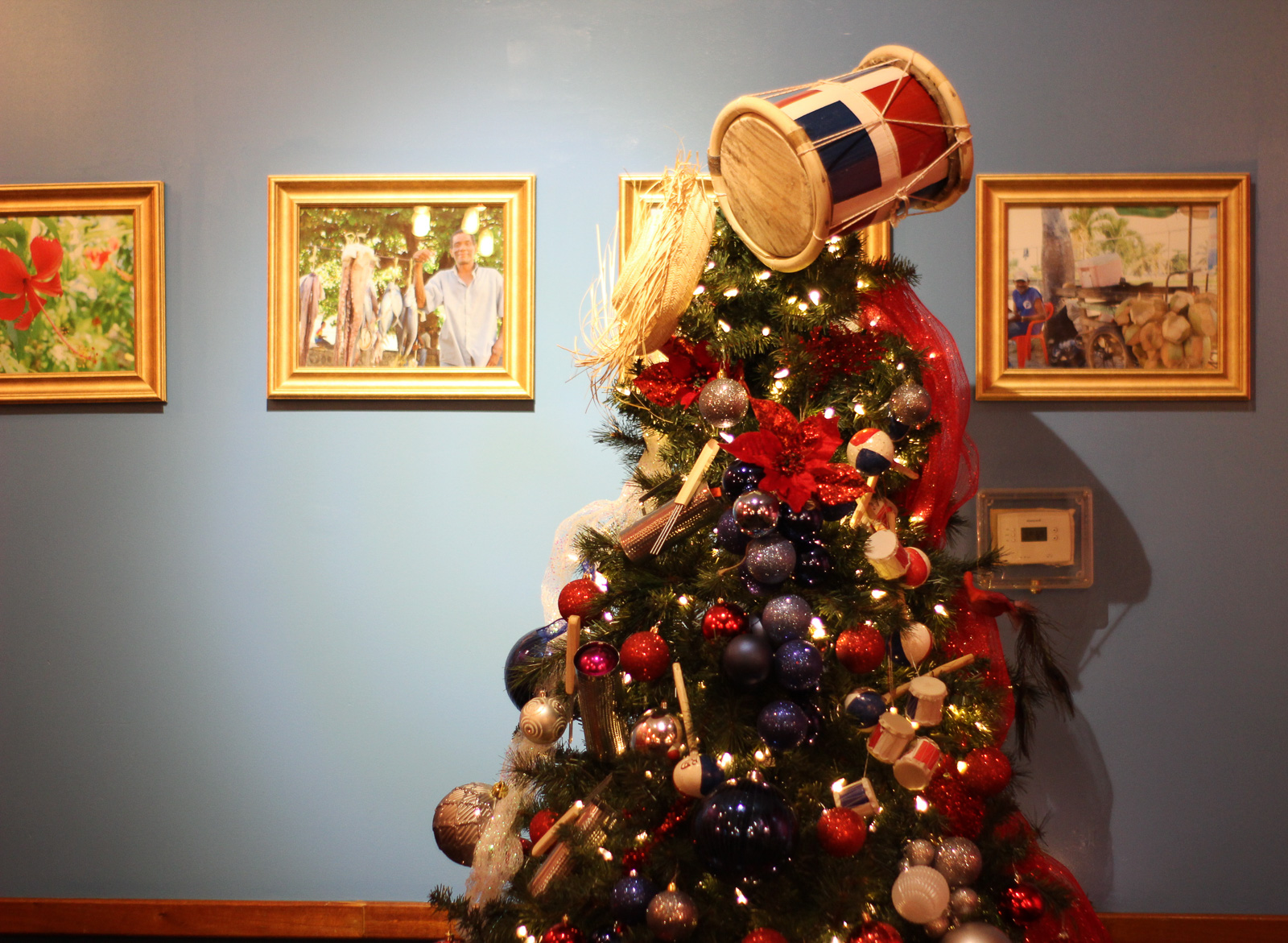
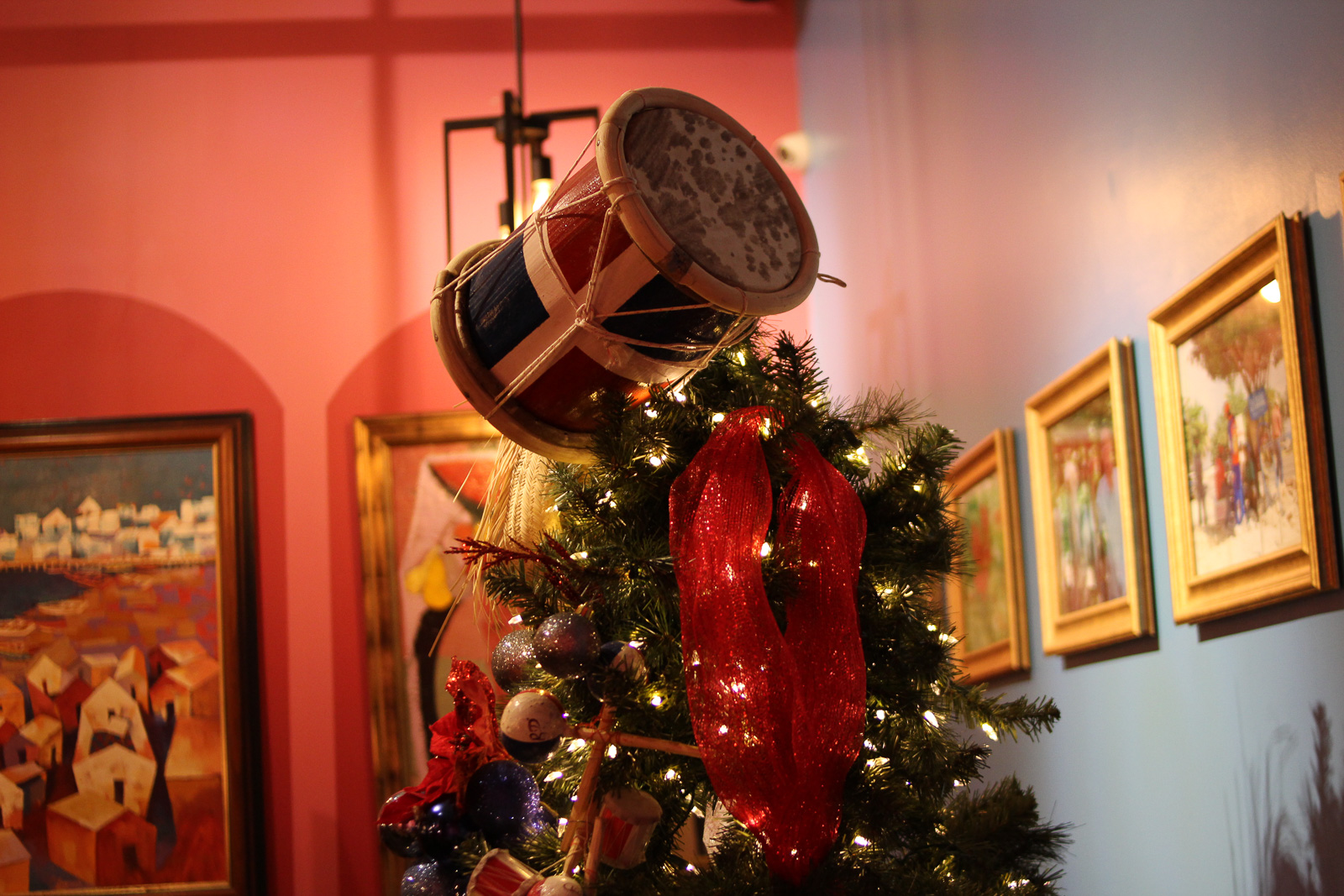
At this time of the year, there’s yet another artifact in front of the wall with the photographs: a Christmas tree. The Christmas tree is as prevalent in the Dominican Republic as it is in the United States but this one is unique. It’s decorated with multiple tamboras—a percussion instrument that is one of the basic instruments in merengue—including a big one at the top. They are all decorated with the Dominican flag.
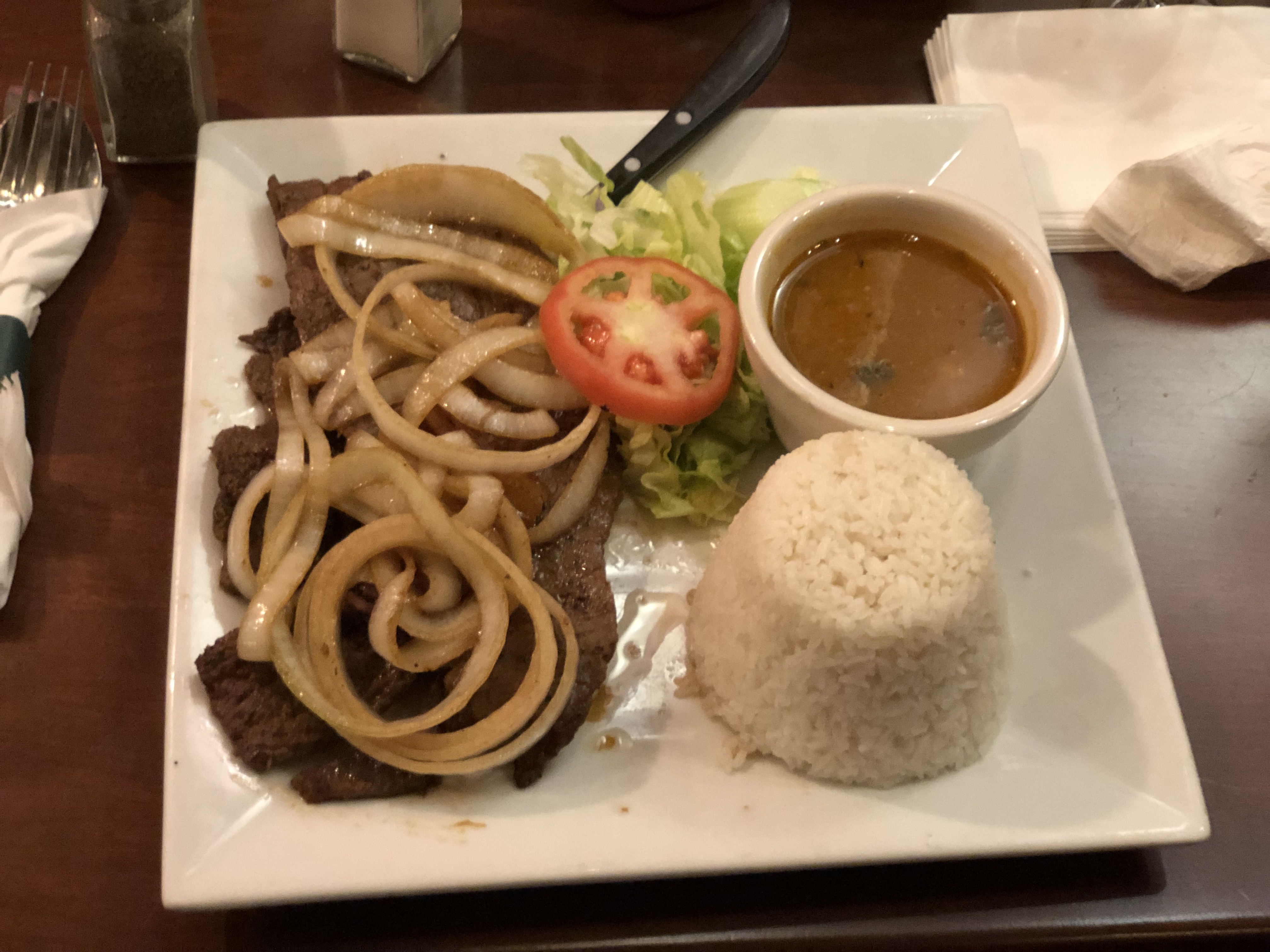
The most important cultural artifact to be consumed in Merengue is, after all, the food they serve. A lot of their main dishes hit that sweet spot between feeling like restaurant food but also like something that might have been cooked and served at a household. Tradition is, after all, at the core of their mission.
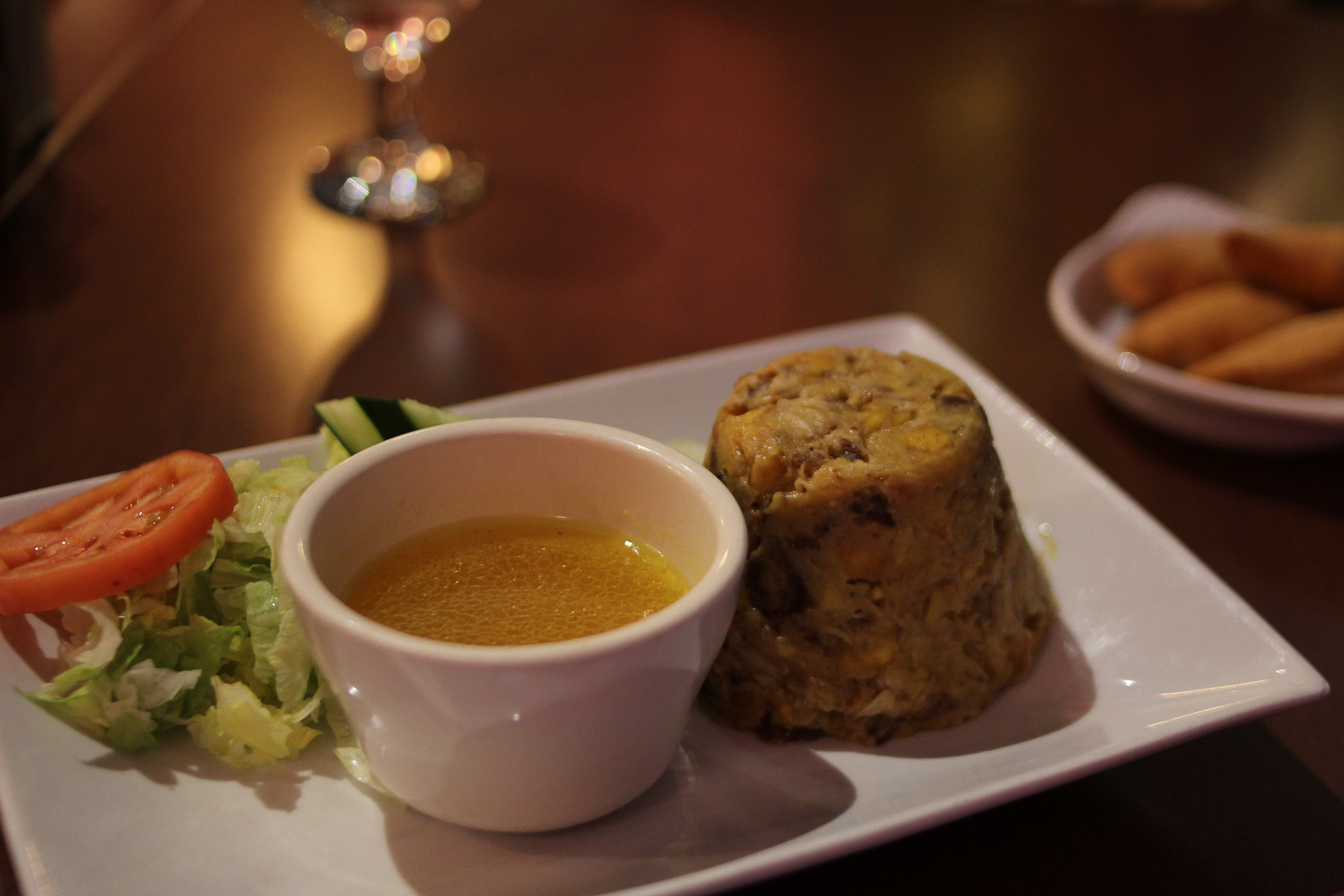
Those thin marinate skirt steaks topped with sautéed onions, those fried pork chops—that’s what you go there for. You go for that oregano, garlic, bitter orange seasoning that flavored my own childhood. The side dishes hit that mark as well: the obligatory rice and beans that in many a household might play the role of a main dish. Fried plantains, whether green or ripe, which are almost synonymous with the island. Other items like the chicharrones, pastelitos (fried pastry filled with whatever your heart desires), and the mofongo (boiled green plantains mashed with garlic and greasy chicharrones) are not often made in households anymore but are in tune with the dripping-in-oil, street-food scene of the Dominican Republic.
Sure, they have their upscale options like the asopao de langosta (a thick lobster soup with a lot of rice), which is not available in its more common chicken variant. They also serve red snapper. But, not every dish at a Dominican restaurant has to be cheap and seafood is a big part of the island’s cuisine.
That the food is so good and the décor so well-chosen might be a testament to hard work over the years. Mr. Piña had no restaurant experience when he started the business in 1994. As he tells it, he had the opportunity to buy a restaurant—a Peruvian restaurant at the time—and said why not?
Mr. Piña, is a tall, sharply-dressed man. He’s balding with a closely kept beard and has a stern yet kind expression. He’s pushing 60 years of age but seems younger. He remembers buying the restaurant back then—actually next door to where they are at now—when it only served twenty people. He says he learned by doing, through reading and owning the restaurant. In its 7th year they moved to its current location, which sits 90 customers, through an expansion program with the Boston Empowerment Center. He says this was like starting again.
Merengue has grown in more ways than this. For one, they now have another room next to the main restaurant where they book events and parties. They have a successful catering service, which according to Mr. Piña has delivered food to hospitals, universities, and even the Boston Red Sox. Having famous friends might not constitute growth but celebrities and politicians like Manny Ramirez, Marty Walsh, Robinson Canó and John Farrell have been pictured at the restaurant. Piña has been quoted talking about David Ortiz, who started going to the restaurant before he became a Red Sox in 2003.
The biggest growth occurs as Merengue grows outside Merengue. Piña has opened two more restaurants recently. He opened the Puerto Rican-food restaurant Vejigantes in 2012 at the South End. He opened Doña Habana, which serves Cuban food, in September 2016 not far from it.

It’s almost as if he has started a sort of chain with the concept of appealing to Caribbean tradition and even nostalgia. Most of the clientele consists of immigrants or descendants of immigrants. They do seem to come from a genuine love of tradition. Nibia, Piña’s wife, is Puerto Rican and helped with the menu at Vejigantes. They both went to Cuba to research before opening Doña Habana.
There are more Dominican restaurants and businesses in the Boston area, even in the same street as Merengue. But Merengue restaurant stands out in its commitment to celebrate tradition. Most of the other places just happen to sell Dominican-inspired products without a philosophy behind them.
In this way, Merengue feeds my nostalgia without really satisfying it. It feels like a mere reference to a place, regardless of how beautiful that reference is. It is also, however, a monument to a clash of cultures; a celebration of the place where many Massachusetts residents can trace their heritage to.
Also, the food is amazing.